

What Is Windshield Replacement Calibration?
A windshield replacement is not always just about swapping broken glass for new glass. If your vehicle has driver-assistance features like lane departure warning, forward collision alert, or automatic emergency braking, you may also need windshield replacement calibration. That raises the question many drivers ask right after a crack spreads or a windshield gets replaced - what is windshield replacement calibration, and do you really need it?
What Is Windshield Replacement Calibration?
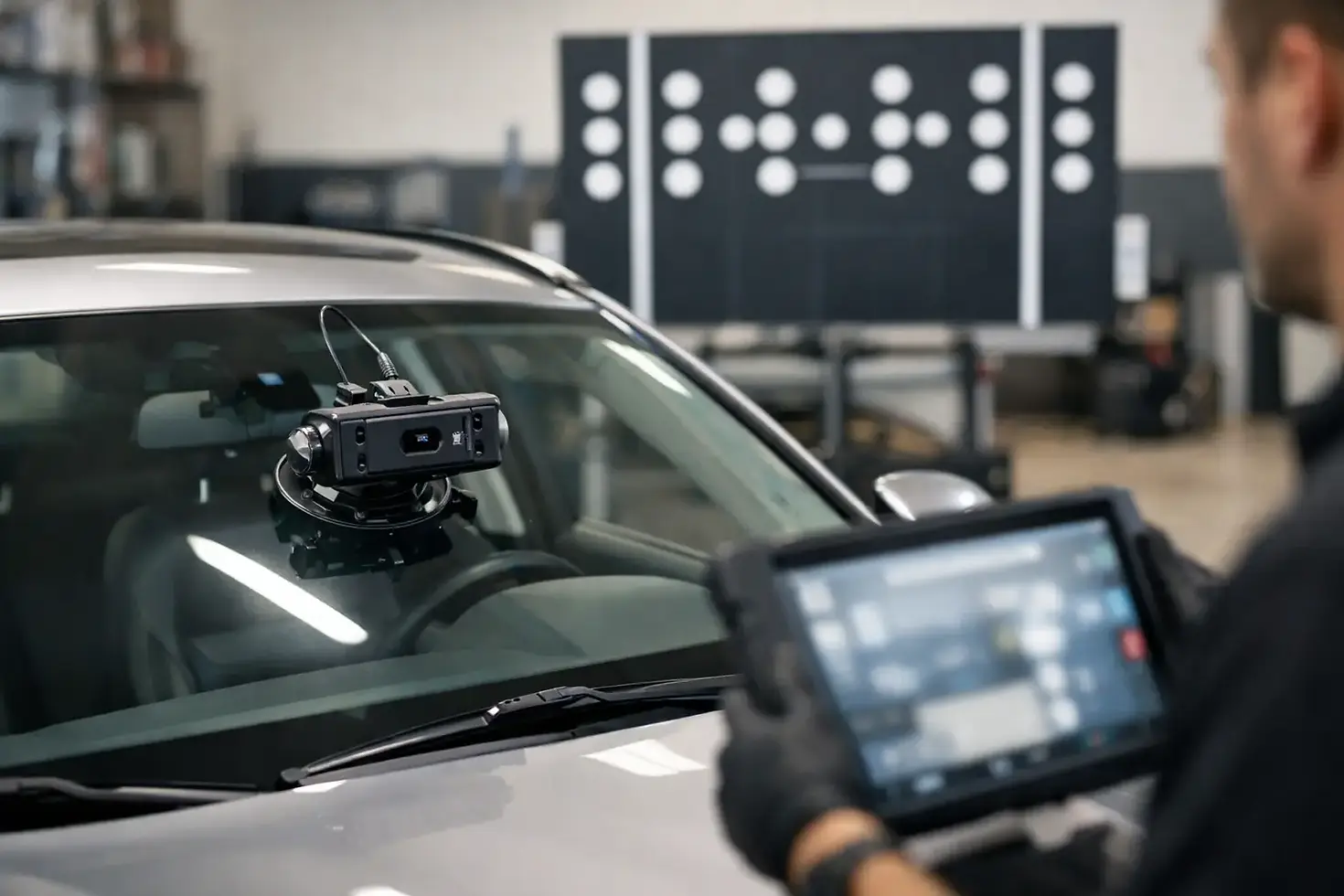
Windshield replacement calibration is the process of adjusting and verifying the cameras and sensors connected to your vehicle’s Advanced Driver Assistance Systems, also called ADAS, after the windshield has been replaced. In many vehicles, the front-facing camera is mounted to the windshield, usually near the rearview mirror.
That camera helps your vehicle read lane lines, track nearby traffic, recognize certain road signs, and support safety features that step in when something goes wrong. Even a small shift in the camera’s angle can affect how those systems work. When a new windshield is installed, the camera may need to be recalibrated so it points exactly where the vehicle manufacturer expects it to point.
This is not guesswork, and it is not an optional add-on in every case. For many newer vehicles, calibration is part of a proper windshield replacement.
Why Calibration Matters After Windshield Replacement
If your vehicle uses a camera mounted on the windshield, the glass is part of the system. Remove the windshield, install a new one, and the camera position can change slightly, even when the replacement is done correctly. That small change can affect how the system measures distance, lane position, and movement ahead.
The result may be simple and obvious, like a warning light on the dash. Or it may be less obvious, which is what makes it serious. A lane keeping system might react late. Forward collision alerts might become less accurate. Automatic high beams might not respond the way they should. You may still be able to drive the vehicle, but the safety technology may not be performing the way it was designed to.
That is why calibration matters. It helps confirm that the camera and related systems are reading the road correctly after the windshield has been replaced.
How Windshield Calibration Works
There are two common types of windshield replacement calibration: static calibration and dynamic calibration. Some vehicles require one or the other. Some require both.
Static calibration
Static calibration is done while the vehicle is parked. The technician uses specialized equipment, targets, measuring tools, and software to position the vehicle and camera system according to the manufacturer’s specifications. This usually has to be done on level ground with controlled spacing and lighting conditions.
Static calibration is precise, but it also requires the right setup. If the measurements are off, the calibration can fail or give bad results.
Dynamic calibration
Dynamic calibration is done while the vehicle is being driven under specific road conditions. The vehicle’s system uses lane markings, traffic patterns, speed, and other real-world inputs to relearn or verify camera alignment. This process often requires clear road markings, decent weather, and a certain speed range.
Dynamic calibration sounds simpler because the car is moving, but it still depends on proper procedures. It is not just a casual road test.
Some vehicles need both
This is where it depends on the make and model. Some manufacturers require a static calibration first, followed by a dynamic calibration. Others call for only one method. The exact process should match the vehicle, not the technician’s preference.
Signs Your Vehicle May Need Calibration
Many drivers do not realize their car has ADAS features until they see a warning message. Others know they have them but are not sure whether those systems depend on the windshield camera.
Your vehicle may need windshield replacement calibration if it has features such as lane departure warning, lane keep assist, forward collision warning, automatic emergency braking, adaptive cruise control, traffic sign recognition, or automatic high beams. On many vehicles, these features rely on a camera mounted to the windshield.
You may also need calibration if the windshield was replaced, if the camera was removed and reinstalled, if there was damage near the camera mount, or if the vehicle has a dashboard warning related to driver-assistance systems. In some cases, even a suspension change, wheel alignment issue, or accident impact can affect sensor accuracy.
What Happens If You Skip It?
Skipping calibration can create a false sense of security. The windshield may look perfect, but the safety systems behind it may be off.
Sometimes the vehicle will alert you right away. Sometimes it will not. That is part of the problem. A camera can be slightly misaligned without making the issue obvious during normal driving. Then when you actually need the system to warn you or react quickly, it may not respond as expected.
For a driver who depends on these features during daily commuting, school drop-offs, or long freeway miles, that is not a small issue. Calibration is about making sure the technology you paid for is still helping protect you.
Is Calibration Required Every Time?
Not every windshield replacement involves calibration, because not every vehicle has a windshield-mounted camera or ADAS features that depend on it. Older vehicles are less likely to need it. Newer vehicles are much more likely to.
The right answer depends on your vehicle and the manufacturer’s requirements. That is why a blanket yes or no is not helpful. If your car has advanced safety systems, the safer assumption is that calibration needs to be checked, not ignored.
A qualified auto glass technician should identify whether your vehicle requires calibration as part of the replacement process. If the answer is unclear, that is a sign to ask more questions before the job moves forward.
Can Mobile Windshield Service Handle Calibration?
This is a common concern, especially for drivers who want the convenience of service at home or work. The answer depends on the vehicle and the type of calibration required.
Some windshield replacement jobs can absolutely be handled through mobile service, and that includes many situations where the technician can identify calibration needs as part of the process. In other cases, the calibration itself may require a specific setup, equipment, or road test conditions that have to be planned carefully.
The key is not whether the service is mobile or in-shop. The key is whether the company follows the correct procedure for your specific vehicle. Convenience matters, but accuracy matters more. A good mobile auto glass company will be direct about what your vehicle needs instead of taking shortcuts.
For busy drivers in areas like Glendale, Burbank, Pasadena, or the San Fernando Valley, mobile service can save a lot of time. You just want to make sure the replacement is done properly from start to finish.
Questions to Ask Before You Schedule
If you are replacing a windshield on a newer vehicle, it is smart to ask whether your vehicle has ADAS features and whether windshield replacement calibration is required. You should also ask what type of calibration is needed, whether the technician follows manufacturer guidelines, and what happens if the system shows a fault after installation.
A reliable company should be able to give you a straight answer. They should not brush off calibration as unnecessary if your vehicle clearly has safety systems tied to the windshield camera.
That matters just as much as the quality of the glass or the installation itself.
Why Experience Makes a Difference
Windshield replacement has changed. Years ago, replacing auto glass was mostly about fit, seal, and visibility. Those things still matter, but now many vehicles also require the technician to understand camera mounts, sensor positioning, and post-installation procedures.
That is one reason experience matters. A company that handles windshield replacement every day is more likely to recognize when calibration is part of the job and when a vehicle calls for extra steps. Prestige Auto Glass focuses on practical service, experienced technicians, and mobile convenience, which is exactly what many local drivers need when a damaged windshield is already disrupting their schedule.
If you are dealing with a cracked windshield, the best move is not just to replace the glass quickly. It is to make sure your vehicle’s safety systems are still working the way they should when the job is done.
A clear windshield helps you see the road. Proper calibration helps your vehicle see it too.


Comments